Articles in Covid-19

Covid levels in England jump by a third. Risk level rises to Moderate at 1 in 857. Full precautions needed in all but moderate & low risk places.

Covid-19 Risk Assessment: Week Ending 30 August 2026

Covid infection levels in England have jumped by a third this week, and we have raised the BuDS overall Covid risk level to Moderate. With 1 in every 857 people in England infected as of 30 August, we now recommend precautions including PPE masks in all but medium and low risk indoor places.

Other respiratory viruses, including flu, remain at low levels but are rising as we move into the autumn.

Read More
A hypodermic needle and syringe seen against a black shadowy background

Assisted Suicide: Government May Be Underestimating Deaths By Nearly 400%

BuDS’ calculations suggest that the Government’s official Impact Assessment for Lauren Edwards’ Terminally Ill Adults (End of Life) Bill may be underestimating the number of medically assisted suicides by nearly 400%. Another way of saying this is that we think the Government’s estimate is almost 4 times smaller than it should be.

To put this in terms of numbers, the Government estimate that around 6,257 people per year will die by assisted suicide once the Bill comes fully into force. Our estimate is that 21,600 people could die by assisted suicide every year.

This really matters. MPs must know that, if they vote for Lauren Edwards’ Bill, they likely are putting in place a massive institutionalised system for the assisted suicide of tens of thousands of British people. This is a completely different situation to that suggested by lobbyists and pro-suicide apologists, who persistently claim that only a few hundred people who are already very close to death will be affected by the Bill.

We urge everyone who opposes this Bill to share our data and calculations with their MP. MPs must know exactly what they are doing if they vote for this Bill.

Read More
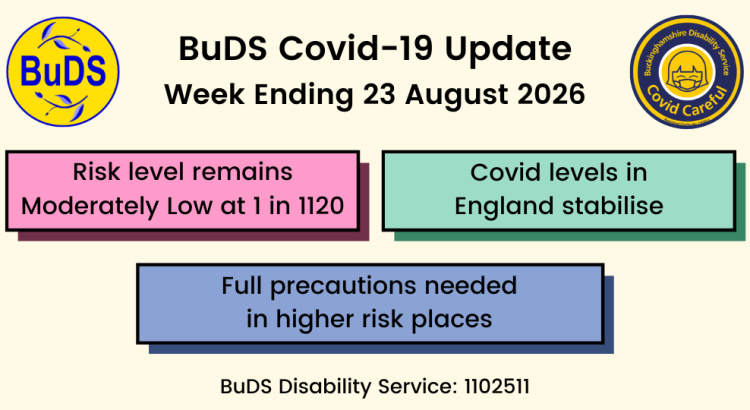
Covid levels in England stabilise. Risk level remains Moderately Low at 1 in 1120. Full precautions needed in higher risk places.

Covid-19 Risk Assessment: Week Ending 23 August 2026

Covid infection levels in England have stabilised after recent increases. Infection levels remain historically lower, with 1 in every 1120 people in England now infected as of 23 August. The BuDS overall risk level remains Moderately Low.

Other respiratory viruses, including flu, remain at low levels but are rising as we move into the autumn. Precautions against catching Covid remain sensible and proportionate in some indoor areas, but levels are still sufficiently low for them not to be needed in all indoor places.

Read More
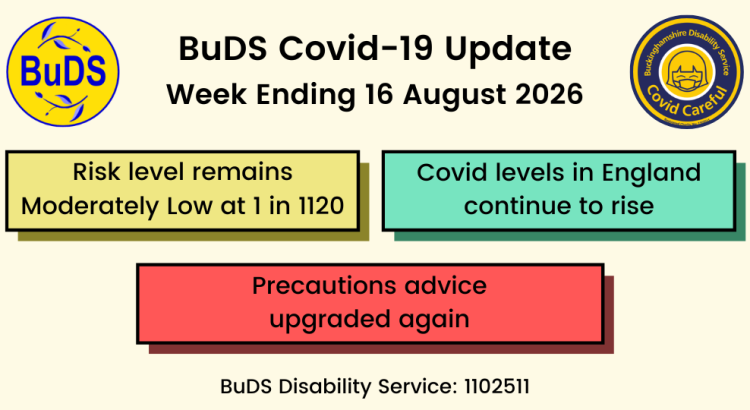
Covid levels in England continue to rise. Risk level remains Moderately Low at 1 in 1120. Precautions advice upgraded again.

Covid-19 Risk Assessment: Week Ending 16 August 2026

Covid infection levels in England continue to rise, according to the latest data, and we have once again upgraded our advice about the precautions that are appropriate in different places in response to the greater infection risk.  

That said, infection levels remain historically lower, with 1 in every 1120 people in England now infected as of 16 August. The BuDS overall risk level remains Moderately Low but is likely to rise to Moderate soon. Other respiratory viruses, including flu, remain at low levels but are also showing signs of a rise. It remains sensible and proportionate to take more precautions in some places now, but there is no need for alarm.  

This update replaces the one issued on 19 August. That update included data only to 9 August, but this one uses the latest data to 16 August. Hopefully the NHS will resume its normal cycle of weekly data reporting as the holiday season ends.

Read More
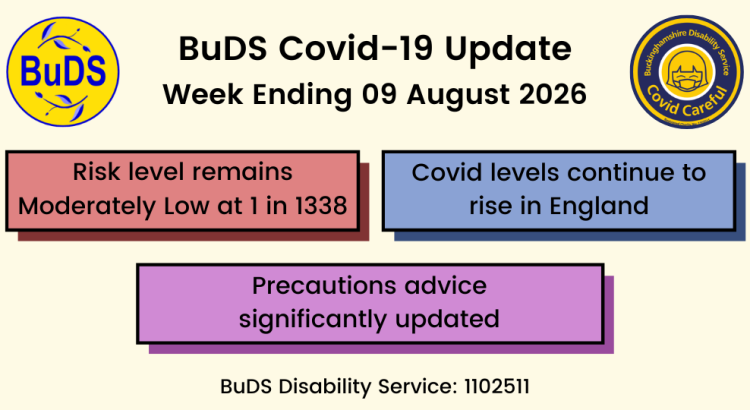
Covid levels continue to rise in England. Risk level remains Moderately Low at 1 in 1338. Precautions advice significantly upgraded.

Covid-19 Risk Assessment: Week Ending 9 August 2026

Covid infection levels in England continue to rise as the summer lull comes to an end. We have significantly upgraded our advice about the precautions that are appropriate in different places in response to this.

That said, infection levels remain historically lower, with 1 in every 1338 people in England now infected as of 9 August. The BuDS Covid infection risk level remains Moderately Low and other respiratory viruses remain at low levels. It is sensible and proportionate to take more precautions in some places now, but there is no need for alarm.  

Read More
A jumbled pile of triangular alert road signs. The signs are white with a red border and have a black exclamation mark on them

Weather & Weather Health Warnings

There are lots of weather and weather-related health warnings issued these days. It can be difficult to know which ones are important and need you to do something. To help you, BuDS has decided that it will start posting the most significant weather and weather health warnings on its own website and social media. That way, if you see that BuDS is repeating or endorsing an official warning, you know it really matters to you as a disabled person. We will only do this for warnings affecting England, not Scotland or Wales.

Weather Warnings

Weather warnings are issued by the Met Office. Their scientists forecast how the weather is going to affect the UK and, if severe weather is expected, they issue a warning.  

Yellow ‘Advice’ Warnings – there are two types of yellow weather warning.

  • The first is advice that the weather is likely to cause some low-level problems for some people.
  • The second type of yellow warning is advice that that the weather may cause serious problems for people, but there is only a low risk of this happening.

BuDS has decided that it will not repeat or amplify yellow weather warnings. This is because we want people to always take seriously a weather warning amplified by BuDS, and yellow weather warnings are often not serious or relevant enough to be worth repeating.

Amber ‘Caution’ Warnings – there are two types of amber weather warning.

  • The first is issued when the Met Office feel that there is a strong chance of severe weather that will disrupt everyday life, cause problems for most people, and make people change their plans and activities. There may be some property or landscape damage and emergencies like power cuts of flooding might occur.
  • The second type of amber warning is issued when the Met Office think that very dangerous weather may occur but there is only a low risk of that happening.

BuDS has decided that it will repeat both types of amber weather warnings. This is because disabled people will be most affected by disruptive weather and we want them to have prompt, accurate information to help them manage the period of disruption.

Red ‘Danger’ Warnings – when the Met Office issues a red weather warning, it means that there is a big risk to people’s life, with widespread damage to buildings and the landscape also likely. Power cuts, flooding and other emergencies are also likely and the Government or councils may have to issue guidance for the public or start up emergency plans. People should not travel during a red warning. Red weather warnings will also usually be sent by emergency alert direct to people’s mobile phones in affected areas.

BuDS has decided that it will repeat and amplify red weather warnings. This is because disabled people are most at risk in weather emergencies and we want them to have prompt, accurate information to help them keep safe.

Health Weather Warnings

Health weather warnings are issued in England by the UK Health Security Agency, or UKHSA. If UKHSA thinks that upcoming hot or cold weather may be a risk to people’s health, they issue an alert. These alerts are only sent about hot or cold weather and not any other threat to health, for example a disease outbreak.  

Although the media report UKHSA weather health warnings, they are not really intended for the general public. They are supposed to be warnings for the NHS, councils and other health and social care organisations, to alert them to an expected increase in demand for their services.

The UKHSA take a lot of things into account before issuing a weather health warning. Health weather warnings are not just about whether the temperatures will be particularly hot or cold, but whether hot or cold weather is expected to have particularly bad effects in people’s health and so make them use NHS and care services more.

Hot Weather Health Alerts

UKHSA look at four things when deciding to issue a hot weather heat alert. These are:

  • Whether the hot weather is likely to make people use NHS services more
  • Whether more people will die than usual
  • Whether the expected daytime temperature will be over 27 degrees centigrade (28 in London)
  • Whether the expected nighttime temperature is much higher than expected

If some or all of these things are likely to happen, the NHS will issue a ‘Heat-Health Alert’. These alerts will be graded as Low, Medium or High

Low Heat-Health Alert – this alert, issued when daytime temperatures are above 27 degrees centigrade (28 in London), tells the NHS and care organisations that demand for health and care services is likely to be higher than usual, 10% more people will die than usual (mostly older and vulnerable people), and hospital and other buildings will become ‘very warm’.

BuDS has decided that it will not usually repeat or amplify Low Heat-Health Alerts warnings. This is because summer temperatures are now regularly above 27C and we would end up repeating a lot of alerts which might mean people did not take notice of more serious alerts.

Medium Heat-Health Alert – this alert issued when daytime temperatures are above 30 degrees centigrade (32 in London), tells the NHS and care organisations that demand for health and care services, especially emergency services, will be much greater than normal. 20% more people than usual will die, and mostly older people or those with health conditions but also children or babies. Patients in hospital or care will be at risk of dehydration, and hospital and other buildings will become overheated. Disabled, vulnerable and older people in the community will be at risk from heat. NHS and care staff availability will reduce.

BuDS has decided that it will repeat Medium Heat-Health Alerts. This is because disabled people will be most affected by hotter weather and the reduced health and care services which will happen in hotter weather. We want disabled people to have prompt, accurate information to help them manage the period of very hot weather.

High Heat-Health Alert – this alert, issued when daytime temperatures are above 38 degrees centigrade (40 in London), tells the NHS and care organisations that demand for health and care services, especially emergency services, will be very significantly greater than normal. 50% more people will die than normal, with people of all ages affected, but especially large numbers of older people. Patients in hospital or care will be at risk of heatstroke and dehydration, and hospital and other buildings may become too hot for use. Disabled, vulnerable and older people in the community will be significantly affected from heat. NHS and care staff availability will be significantly reduced.

BuDS has decided that it will repeat and amplify High Heat-Health Alerts. This is because disabled people are most at risk in heat emergencies and we want them to have prompt, accurate information to help them keep safe.

Cold Weather Health Alerts

UKHSA look at three things when deciding to issue a cold weather heat alert. These are:

  • Whether the cold weather is likely to make people use NHS services more
  • Whether more people will die than usual
  • Whether the expected average temperature will be below 2 degrees centigrade

If some or all of these things are likely to happen, the NHS will issue a ‘Cold-Health Alert’. These alerts will be graded as Low, Medium or High

Low Cold-Health Alert – this alert, issued when average temperatures are predicted to be below 2 degrees centigrade for more than 48 hours, tells the NHS and care organisations that demand for health and care services is likely to be higher than usual, More people will die than usual, mostly older and vulnerable people.

BuDS has decided that it will not usually repeat or amplify Low Cold-Health Alerts warnings. This is because winter temperatures are now regularly below 2C and we would end up repeating a lot of alerts which might mean people did not take notice of more serious alerts.

Medium Cold-Health Alert – this alert is issued when average temperatures are predicted to be below 2C for 5 days or under zero for 48 hours. This alert tells the NHS and care organisations that demand for health and care services, especially emergency services, will be much greater than normal. Significantly more people than usual will die, mostly older people or those with health conditions but also children or babies. Disabled, vulnerable and older people in the community, especially those living rough, will be at risk from cold. NHS and care staff availability will reduce.

BuDS has decided that it will repeat Medium Cold-Health Alerts. This is because disabled people will be most affected by colder weather and the reduced health and care services which will happen in colder weather. We want disabled people to have prompt, accurate information to help them manage the period of cold or freezing weather.

High Cold-Health Alert – this alert is issued when average temperatures are predicted to be below zero for 5 days or -2C for 48 hours. This alert tells the NHS and care organisations that demand for health and care services, especially emergency services, will be very significantly greater than normal. Significantly more people will die than normal, with people of all ages affected, but especially large numbers of older people. Patients in hospital or care will be affected by staff shortages and disruption to supplies. Disabled, vulnerable and older people in the community will be significantly affected by cold and the reduction of homecare services. NHS and care staff availability will be significantly reduced.

BuDS has decided that it will repeat and amplify High Cold-Health Alerts. This is because disabled people are most at risk in freezing conditions and we want them to have prompt, accurate information to help them keep safe.

Finally…

BuDS is helping disabled people to be aware of weather and health alerts through our Health & Disability Information, Advice & Guidance (IAG) project. We want disabled people to have prompt access to accurate and honest information and guidance that they most need in their everyday lives. We receive no grant funding for this work. If you’d like to make a donation, or volunteer to help us in this work, use the buttons below.

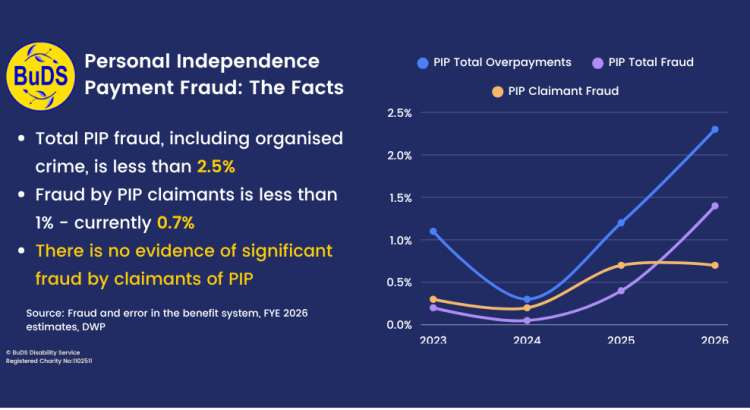
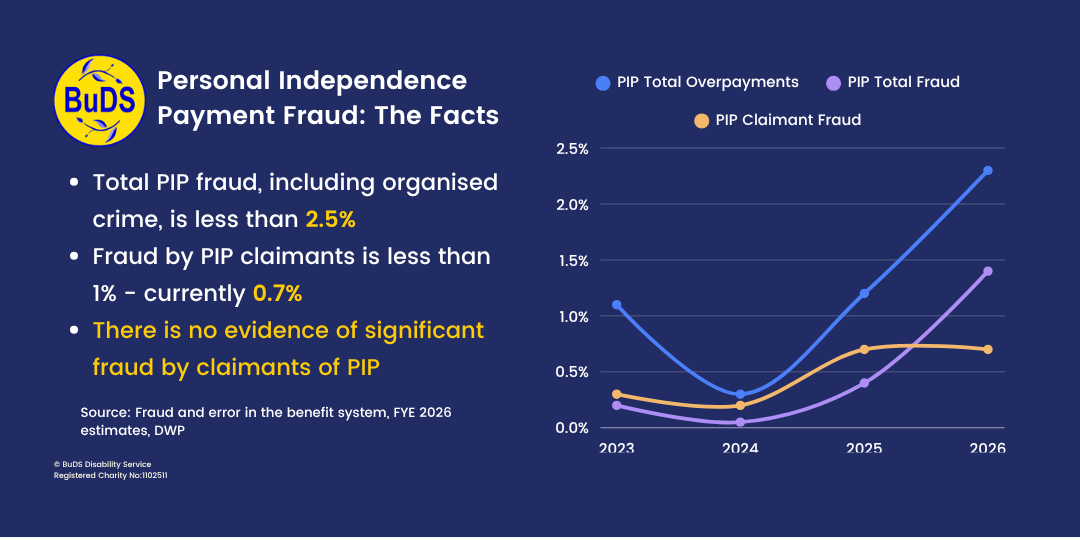
A BuDS Disability Service infographic headed “Personal Independence Payment Fraud: The Facts”. On the right is a line graph with three lines. The blue line shows PIP Total Overpayments climbing from 1% in 2023 to between 2% and 2.5% in 2026. The purple line shows PIP Total Fraud climbing from around 0.7% in 2023 to just under 1.5% in 2026. The gold line shows PIP Claimant Fraud, which climbs from 0.3% in 2023 to 0.7% in 2026. On the left is a bulleted text box with the following text: “Total PIP fraud, including organised crime, is less than 2.5%; Fraud by PIP claimants is less than 1% - currently 0.7%; There is no evidence of significant fraud by claimants of PIP”. Another text box says: “Source: Fraud and error in the benefit system, FYE 2026 estimates, DWP”.

Personal Independence Payment Fraud: The Facts

We’ve produced another handy infographic to help you push back against stories about people fraudulently claiming PIP (Personal Independence Payment). This graphic is free to share or download, and we encourage you to do so. Just use the button below to save the image to your device.

As the infographic shows, the rate of claimant fraud of PIP is less than 1% and there is no evidence of significant fraud by claimants of PIP. Claimant fraud means fraud by individuals, rather than fraud by organised criminals.

Read More
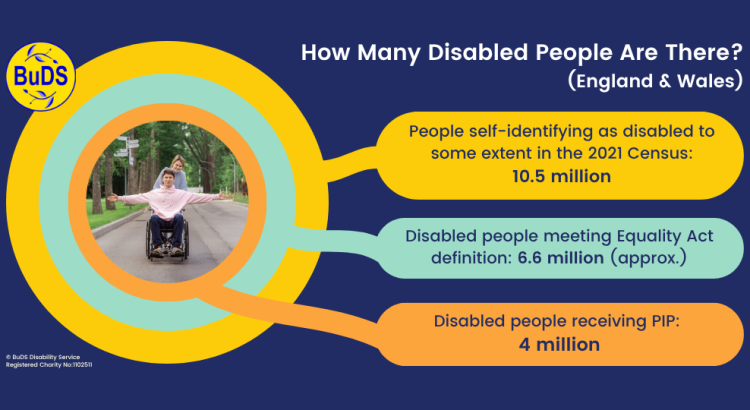
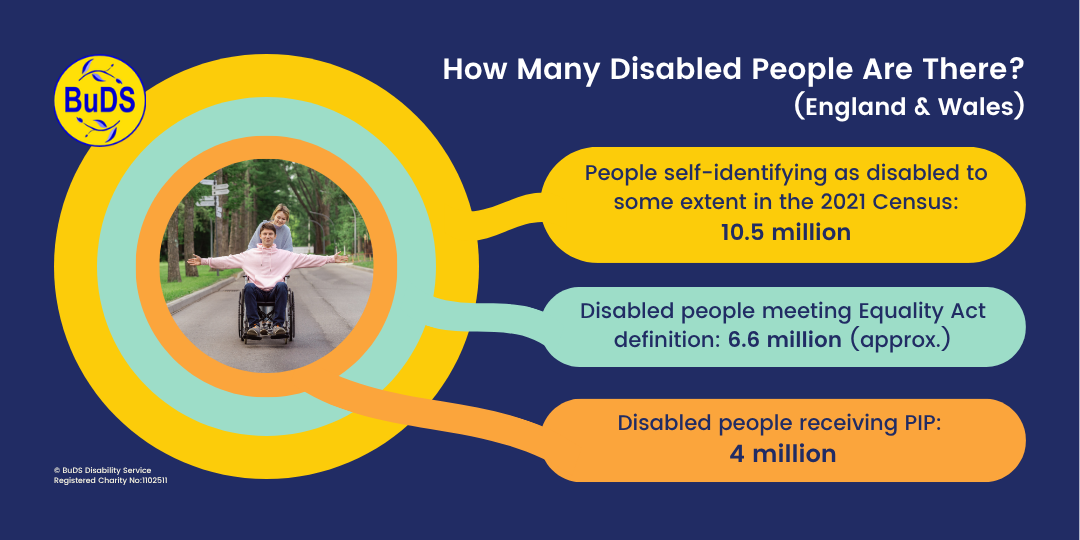
A BuDS infographic headed "How Many Disabled People Are There? (England & Wales)". There are three overlapping coloured circles with labels of the same colour. In the centre of the circles is a picture of a wheelchair-user with his arms spread wide as if in welcome or show. The biggest yellow circle is labelled “People self-identifying as disabled to some extent in the 2021 Census: 10.5 million”. The middle-sized teal green circle is labelled “Disabled people meeting Equality Act definition: 6.6 million (approx.)”. The smallest dull orange circle is labelled “Disabled people receiving PIP: 4 million”.

How Many Disabled People Are There?

This article refers to England & Wales only. Accurate as of August 2026

We’ve produced this handy infographic showing how many disabled people there are in England & Wales. This is free to download and share, and we encourage you to do so. Just use the button below. The public must have access to accurate information when disability is such a hot political topic.

Counting Disabled People

Counting disabled people in England & Wales is much more difficult than it appears. That’s because there are lots of different definitions of ‘a disabled person’.

Census 2021 – 10.5 Million

The Census in 2021 asked people if they had a long-term physical and mental condition and, if they answered yes, asked them whether that condition affected their ability to do everyday activities ‘A lot’, ‘A little’, or ‘Not at all’. The Office for National Statistics count everyone who said their ability was affected ‘a lot’ or ‘a little’ as a disabled person. That’s 10.5 million people in 2021 in England & Wales (this will be larger now).

Equality Act – About 6.6 million

The Equality Act 2010 protects ‘disabled people’ from discrimination. The Act defines a disabled person as someone with a long-term physical or mental condition which substantially limits their day-to-day life. But there is no registration scheme for ‘disabled people under the Equality Act’, so nobody really knows how many disabled people there are according to the Act’s definition.

You can cross-refer the Census 2021 results with the Equality Act. The 4.9 million people who told the Census that their conditions affect their day-to-day life ‘a lot’ certainly also qualify under the Equality Act, which covers people with a ‘substantial’ limit on their day to day life. At least some of the 5.6 million people who told the Census that their conditions affect their day-to-day life ‘a little’ will also qualify under the Equality Act definition. But nobody knows how many. We have assumed a third of those who told the Census that their life was affected ‘a little’ qualify as a disabled person under the Equality Act, but it could be more, or less.

Receiving Personal Independence Payment (PIP) – 4 million

According to the DWP, around 4 million disabled adults in England and Wales currently receive PIP.

PIP is paid not because a person is disabled (whatever definition you use), but if a person is disabled AND their condition affects them in very specific ways. PIP has 12 complicated tests looking at very specific living activities and how people can move around outdoors. Disabled people score points according to how much their conditions affect their ability to do only the activities specified in the tests. An award of benefit is made if the total point score exceeds certain thresholds. This is very different from Disability Living Allowance, which PIP replaced for adults, which looked much more holistically at how much help people needed in their everyday life and when going out.

Because PIP is a very artificial test of disability, people with different impairments and conditions score points very differently under the 12 tests. This is partly deliberate, because PIP was designed to reduce the cost of disability benefits by a fifth. However, the DWP is as incompetent at drafting legislation as it is at administering benefits, and there are a lot of ‘unintended consequences’ arising from the way the tests work. The courts too have decided that some of the PIP tests work differently in fact from the way the DWP hoped they would. 

Compensation, Not Welfare

PIP is supposed to compensate or refund disabled people for the extra costs of being disabled. The charity Scope calculates that disabled people spend on average around £13,140 more than non-disabled people just to live the same lifestyle. The maximum annual award of PIP, which only 37% of claimants receive, is significantly less than this, at £10,120. The average PIP award is only £6900.

Social Security, Not Welfare

If disabled people fall into crisis, the state then pays to help them cope and to get out of crisis. Providing crisis support is far more expensive than making a small payment to stop the crisis occurring. Supporting a single homeless disabled person, for example, costs councils on average £13,000 per annum, plus the cost of temporary housing, additional GP visits, hospital stays, etc. The reason disability benefits were introduced was to save money, because giving disabled people a small ‘social security’ payment was much cheaper than the alternative.

When politicians talk about cutting ‘welfare’, this is just economic incompetence. If you cut the small social security amounts which help disabled people stay independent and out of crisis, the taxpayer will end up paying much more when those disabled people fall into crisis. BuDS looked into this matter in detail when it was suggested that ‘welfare’ could be cut to fund defence – you can find out more by clicking the button.

Are Too Many Disabled People Claiming PIP?

There is no objective evidence of this. The 4 million adults currently claiming PIP matches up quite well with the 4.9 million people who told the Census in 2021 that their conditions affect their day-to-day life ‘a lot’.