

The Support & Report Service is here to help anyone affected by disability hate crime or a disability hate incident. If you choose to report the matter to the police, the Service can support you and help you through the process.

The Support & Report Service is here to help anyone affected by disability hate crime or a disability hate incident. If you choose to report the matter to the police, the Service can support you and help you through the process.

Written by Siobhan Meade
Disclaimer: this is a personal blog by a BuDS member. The views expressed are personal, and don’t necessarily represent those of BuDS or our Trustees.
24 years ago, I heard five words that will haunt me forever, “you’re never going to see again”.
This is how an Ophthalmologist at a Kent hospital broke the news to a distraught 16 year-old girl, who’s one remaining optic nerve finally gave up the ghost and snapped after I walked into a door at school.
Read More
This article explains the law on disability hate crime in England as of October 2022. It was written by Olivia Hopwood, a law student, and verified and approved by a leading criminal law solicitor on behalf of BuDS. It is written mainly for professionals and practitioners, and some may find the language difficult to follow. If you need any help with this article, please contact us.
Read More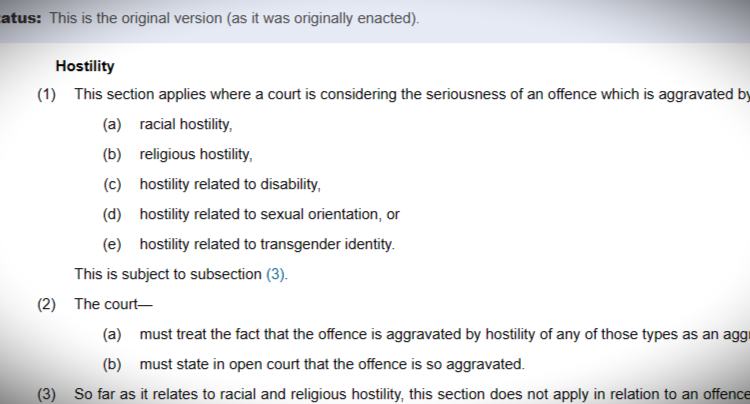
Crown Prosecution Service (CPS) guidance about whether an offence was aggravated within the meaning of s.66 of the Sentencing Act 2020 can be found below. This article was written by Olivia Hopwood, a law student, and verified and approved by a leading criminal law solicitor on behalf of BuDS. It is written mainly for professionals and practitioners, and some may find the language difficult to follow. If you need any help with this article, please contact us.
This article is intended as a supplement to a main article – read it here.
Read More
Case law relating to s. 66 of the Sentencing Act 2020 can be read below. This article was written by Olivia Hopwood, a law student, and verified and approved by a leading criminal law solicitor on behalf of BuDS. It is written mainly for professionals and practitioners, and some may find the language difficult to follow. If you need any help with this article, please contact us.
This article is intended as a supplement to a main article – read it here.
Read MoreDisabled people are sometimes subject to abuse, insults or physical violence because of their disability. BuDS’ Fair4All Attitudes & Hate Crimes project confidentially supports victims of disability hate incidents, helps them to report incidents to the police if they wish to do, and works to educate and campaign about disability hate crime.
The Fair4All Attitudes & Hate Crimes project is intended to be led and staffed by BuDS volunteers with the support of a part-time paid Disability Hate Crime Officer. A team of volunteers will support victims of hate incidents and crime with emotional support, practical information and, if the victim wants, reporting incidents to the police and going to court. This voluntary role is about managing this team of volunteers (as well as supporting victims if necessary).
This role would ideally suit someone with experience of supporting victims or people who have experienced tough times and/or managing teams of people.
To apply or express an interest, please email volunteering@buds.org.uk. To arrange an informal chat about the role, please e-mail simonec@buds.org.uk.
Disabled people are sometimes subject to abuse, insults, or physical violence because of their disability. BuDS’ Fair4All Attitudes & Hate Crimes project confidentially supports victims of disability hate incidents, helps them to report incidents to the police if they wish to do, and works to educate and campaign about disability hate crime.
The Fair4All Attitudes & Hate Crimes project is intended to be led and staffed by BuDS volunteers with the support of a part-time paid Disability Hate Crime Officer. A team of volunteers will support victims of hate incidents and crime with emotional support, practical information and, if the victim wants, reporting incidents to the police and going to court.
This role would ideally suit someone with experience of supporting victims or people who have experienced tough times. Disabled people are particularly welcome to apply.
To apply or express an interest, please email volunteering@buds.org.uk. To arrange an informal chat about the role, please e-mail simonec@buds.org.uk.
Disabled people are sometimes subject to abuse, insults, or physical violence because of their disability. BuDS’ Fair4All Attitudes & Hate Crimes project confidentially supports victims of disability hate incidents, helps them to report incidents to the police if they wish to do, and works to educate and campaign about disability hate crime.
The Fair4All Attitudes & Hate Crimes project is intended to be led and staffed by BuDS volunteers with the support of a part-time paid Disability Hate Crime Officer. A team of volunteers will produce educational and awareness material, carry out campaigns and projects, give presentations and change minds about disability.
This role would ideally suit someone with experience of educational or awareness-raising campaigns, but this isn’t essential. Disabled people are particularly welcome to apply.
To apply or express an interest, please email volunteering@buds.org.uk. To arrange an informal chat about the role, please e-mail simonec@buds.org.uk.
Disabled people are sometimes subject to abuse, insults or physical violence because of their disability. BuDS’ Fair4All Attitudes & Hate Crimes project confidentially supports victims of disability hate incidents, helps them to report incidents to the police if they wish to do, and works to educate and campaign about disability hate crime.
This voluntary role provides the essential link between the BuDS Attitudes & Hate Crime Project and criminal justice agencies, mainly Thames Valley Police and the Crown Prosecution Service. It will help make sure victims are supported properly and have the right support as they engage with the police and courts.
This role would ideally suit someone with experience of working in the police or a criminal justice agency or who has experience of supporting victims in the criminal justice field. However, this is not essential. Disabled people are particularly welcome to apply.
To apply or express an interest, please email volunteering@buds.org.uk. To arrange an informal chat about the role, please e-mail simonec@buds.org.uk.