In June 2025, the Government decided to review the main UK disability benefit, Personal Independence Payment or PIP. This review was co-chaired by Sir Stephen Timms, Minister for Social Security and Disability, Sharron Brennan and Dr Clenton Farquharson CBE. The Review is widely known as the ‘Timms Review’.
Before announcing the review, the Government had tried to get Parliament to agree to significant cuts to PIP. These proposed cuts were very unpopular and not supported by many MPs. The Government introduced the Review rather than pressing ahead with the cuts.
On 9 July, the Government published the Interim Report of the Timms Review. The Interim Report is not the final report of the Review. It sets out their thinking so far, and the evidence they are replying on. The Final Report of the Timms Review is due in the autumn of 2026, but may be delayed.
You can use the buttons below to visit the main Government page about the Timms Review and to see the Interim Report.
BuDS’ Response to the Interim Report
BuDS expressed strong concern about the Interim Report, calling it ‘incomplete’, ‘less than honest’ and ‘calculatedly misleading’.
BuDS has engaged with the DWP for nearly 20 years. We think that the Interim Report entirely fails to acknowledge that PIP was designed in 2012 by the then Government primarily to cut the cost of disability benefits by a fifth. This was an objective openly acknowledged by the Government at the time. Many of the faults in PIP noted by the Review, such as the complicated scoring system, the traumatic assessment and re-assessment process, and the use of unaccountable private assessment companies, are not system defects which have arisen over time, but deliberately designed features of PIP. This incomplete and less than honest account of the origins of PIP sets the wrong tone, corrupts the evidence base, and raises concern that the Review is unduly influenced by departmental interests.
BuDS has also noted the repeated references in the Interim Review to overriding cost limits. These include that any recommendations must remain “within the Office for Budget Responsibility’s (OBR) projections for future spending on PIP” (para 4), that “final recommendations must sit within the OBRs projections for future spending on PIP” (para 45) and “The steering group will therefore need to carefully consider how to balance the focus of the Review between rights, fairness, independent living, and sustainability within fixed financial limits” (para 46).
Societal changes are inevitably creating more disabled people. The population is aging, the ongoing Covid pandemic and cost of living crisis are significantly impacting both physical and mental health, and deteriorating health and care services are leading to worsening health. The Review is calculatedly dishonest about these facts.
If the Review has already accepted a fixed ceiling for the amount that the Government is willing to pay to support an increasing number of disabled people, BuDS says, then the Review has no choice but to rob Peter to pay Paul: to cut support from some disabled people to preserve it for others. The Interim Report fails to make this clear, which is another calculated dishonesty.
The Future of PIP
BuDS has also called for ‘meaningful, positive’ reform of PIP so that the benefit helps integrate disabled people into society, rather than exclude them.
Disabled people want to be part of society, but they face barriers which exclude them. Overcoming those barriers costs money, and PIP is supposed to compensate disabled people for the additional cost of simply being a normal member of society. Scope has calculated that households with a disabled person need at least £1100 extra per month just to play a normal role in society. PIP currently contributes less than half that amount on average, so clearly PIP payment levels need to substantially increase.
Alongside payment levels, the PIP application and assessment process needs to be completely replaced. When PIP was designed in 2010-11, the stated intent of the then Government was to cut the cost of disability benefits by a fifth. PIP was designed to achieve that cut, not to meet the legitimate needs of disabled people. The hideously complicated and irrational scoring system, the intrusive and traumatic assessment and re-assessment process, the employment of unaccountable private assessment companies: these all arise from that intention to make disability benefits hard to claim and retain, so as to make cuts.
BuDS thinks that the Timms Review now has the opportunity to sweep away the conscious and deliberate brutality of the past and introduce a positive and life-affirming application and review process for PIP. Disabled people need to be able to freely and easily get the help with the additional costs they face because they are disabled, and to get that support adjusted when their circumstances change. The appalling current system where disabled people fear losing PIP because DWP may arbitrarily change their mind, or make assumptions without evidence, must end.
The new application process for PIP must be streamlined and sensible. So far as possible, disabled people diagnosed with permanent medical conditions with predictable impacts on their daily living and mobility should receive PIP by default. Anyone diagnosed with paranoid schizophrenia or a spinal injury, for example, is likely to face significant additional costs arising from their condition; it is inefficient, wastes taxpayer funds and is brutal and cruel to subject disabled people to a detailed assessment when it is obvious from the nature of their diagnosis that they will face additional costs in living a normal life. And the absurd, costly and harsh DWP practice of making fixed term PIP awards and forcing disabled people into cycles of constant reassessment must end.
Disabled people who work may face extra costs because they are a disabled worker compared to disabled people who do not work, and PIP’s structure should reflect that. The overlapping roles of PIP and Access to Work need to be eliminated. In the same way, disabled people who are students may face extra costs because they are a disabled student compared to disabled people who are not studying, and the overlapping role of Disabled Students Allowance needs to be eliminated. PIP should be a single gateway to the financial compensation for extra costs that disabled people need to support them in their normal lives as normal members of society.
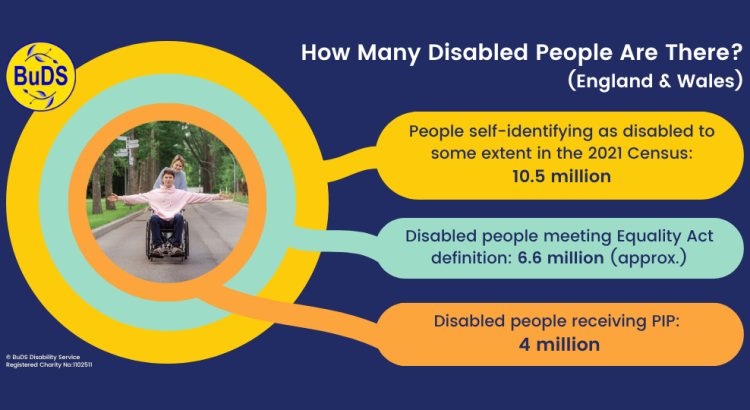
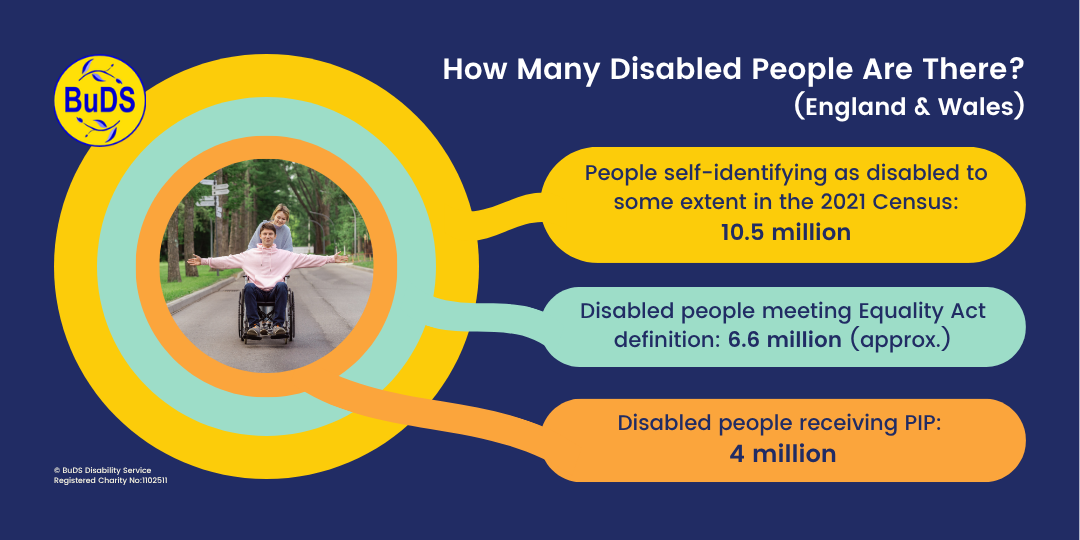
Finally, PIP needs to be seen as an investment by society in disabled people, who make up a fifth of society. With reform of the DWP and with appropriate help, millions of disabled people will be able to stop leading passive, furtive lives, hiding from the DWP, and become productive positive and proud contributors to their society, as workers, volunteers, parents and carers. PIP must become a major driver and enabler of economic and social growth, tapping into a huge latent reservoir of talent, skills and determination.
You can see two press statements from BuDS below.