
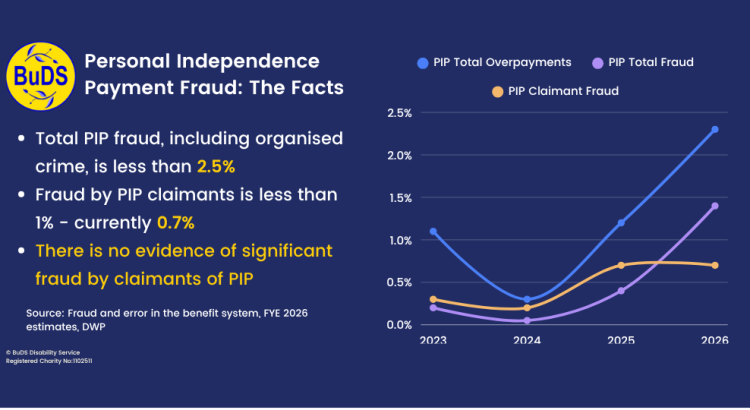
We’ve produced another handy infographic to help you push back against stories about people fraudulently claiming PIP (Personal Independence Payment). This graphic is free to share or download, and we encourage you to do so. Just use the button below to save the image to your device.
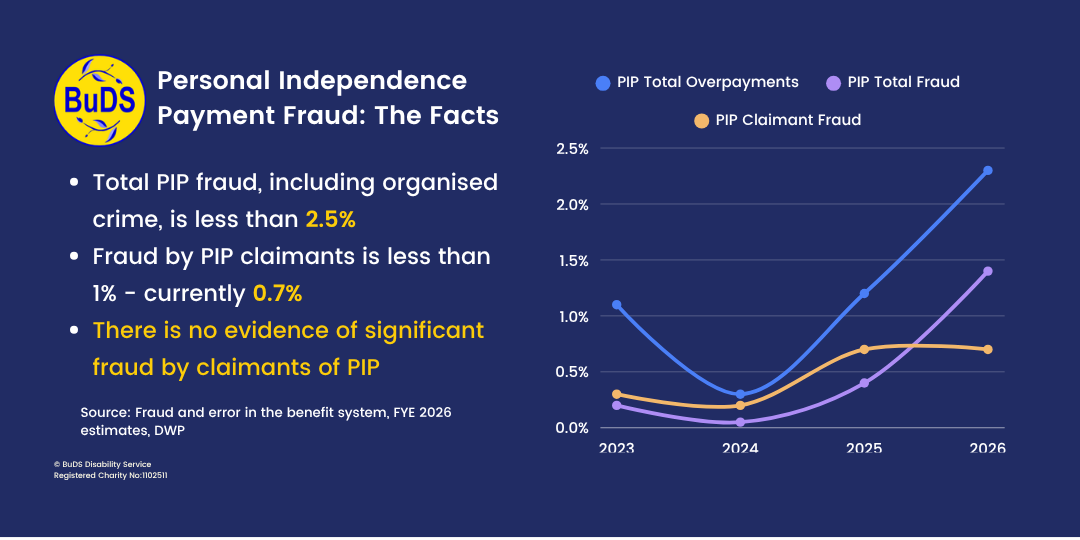
As the infographic shows, the rate of claimant fraud of PIP is less than 1% and there is no evidence of significant fraud by claimants of PIP. Claimant fraud means fraud by individuals, rather than fraud by organised criminals.
The total rate of fraud on PIP is under 1.5%, so not high, and more than half of that total is due to organised crime gangs defrauding the system on a large scale, not individuals cheating on their own claim. DWP should be focusing on stopping criminals defrauding the system, not harassing disabled people.
Although it is not fraud, it’s worth noticing that the DWP itself overpays more than 2% of claimants through what is tactfully called ‘official error’. This overpayment dwarfs what is paid to claimants who’ve made a fraudulent claim.
The source for this data is the latest stats bulletin from the DWP itself: Fraud and error in the benefit system, FYE 2026 estimates.
A False Narrative of Cheating
Journalists, some politicians and many people on social media seem to think that cheating the DWP to get PIP is easy. They say that the rise in people claiming PIP since the Covid pandemic started is due to fraud and benefit cheats, not to a rise in disability in the population.
Politicians of all major parties have always tried to cover up their plans to cut support for disabled people by claiming that there are huge numbers of cheats playing the system. This false story or narrative gives politicians a mandate to cut benefits while claiming that it is only the cheats that will suffer. In reality, of course, it is genuine disabled people who suffer if support is cut.
We have produced this infographic to help disabled people and their allies to oppose and refute this false narrative. It’s particularly useful if you come across a benefits cheat narrative on social media, because you can just drop the graphic into comments without having to say anything personally.
We will be publishing other infographics to help disabled people and allies push back against other common myths and smears about disabled people. Why not follow us on social media so that you get these in your feed?