Articles in Reach4Work

Three people sitting at a long desk working on laptops and desktop computers. There are papers and glasses of water also on the table.

About Reach4Work

Since 2010, BuDS has helped its volunteers towards work. Our Reach4Work project, created in 2018, codified and developed that help, creating a professional wrap-around service for our disabled volunteers who want to move into or closer to work.

BuDS is exceptionally successful at moving disabled jobseeker volunteers into or closer to work…

Read More
A green background with white text of "Easy read" in the top left corner, and a white silhouette of a person reading on the right hand side. Copyright Devon Partnership NHS Trust

About EasyRead

BuDS publishes some of our articles in EasyRead format. These articles are produced by our volunteers, and so our capacity is limited. Over time we will publish more EasyRead articles. Please be patient with us whilst we grow this project.

Read More
A white woman wearing headphones with a microphone looking into the camera and speaking

About The Enquiries Project

The BuDS Enquiries Team answers questions and queries from disabled people about a very wide range of issues. We try to fill the gaps left by other support services and helplines, so we often support disabled people with complex and difficult issues.

Getting Help From The Enquiries Project

Any disabled person in England can contact the Enquiries project for help. Parents, carers, and supporters can also contact us on behalf of a disabled person. We don’t have strict rules about who we can help: we will always do our best to support you and will let you know immediately if, for any reason, we can’t.

The Enquiries project is staffed entirely by volunteers, many of them disabled people themselves. We are often very busy and there may be a delay in getting back to you. We are sorry about this, but we can only do so much. The Enquiries project is not a crisis or emergency service.

Read More
An autistic school child in uniform looks at their teacher

About The BuDS SEND Transitions Service

The BuDS SEND Transitions Service is a three-year project funded by The Rothschild Foundation. The purpose of the SEND Transitions Service is to improve the experience of disabled children and young people moving through key transitions within school education and from school education into work or further/higher education. It will do this by: 

  • Investigating and reporting on services supporting disabled children and young people.
  • Assessing to what extent the needs of disabled children and young people are met by existing services.  
  • Proposing new and improved services to eliminate gaps and address deficiencies, including new BuDS and Reach4Work services.

The SEND Transitions Service is made up of workstreams from a number of BuDS projects, principally Fair4All Education and Reach4Work.

To learn more about the Reach4Work workstream, which is looking at disabled young people’s transition from education to employment, click here.

A learning disabled child smiling into the camera and holding up her hands, which are brightly painted with several colours

About Fair4All Education

The Fair4All Education project tackles the most important educational issues facing disabled children and young people, and their parents/carers, in Bucks.

The core of the Fair4All Education project is a ‘working community’ of professionals, parents, carers and disabled young people who are passionate about making a real difference. Working under the BuDS umbrella, the Fair4All Education team works together to define an agenda for action and plan how change will be made to happen.

Read More

About Fair4All Events

Disabled people are often excluded from outdoor public events. This is not because they do not want to attend these events, but because the way the event is organized and staged creates barriers that make it difficult or impossible for them to attend. BuDS’ free-to-use Fair4All event project helps event organisers remove those barriers and attract more disabled people to their events, making them more successful. There are over 40,000 disabled people in Buckinghamshire and over 100,000 families with a disabled member, so being more accessible can significantly boost an event’s popularity and attendance.

Event organisers are often not aware that they are creating barriers which are reducing the appeal of their events. Event management training and qualifications do not usually cover disabled accessibility and inclusion. Disabled people are so used to events not being accessible that most do not even try to attend, which means event organisers do not see the difficulties that disabled people face.

Read More

About IAG Covid-19

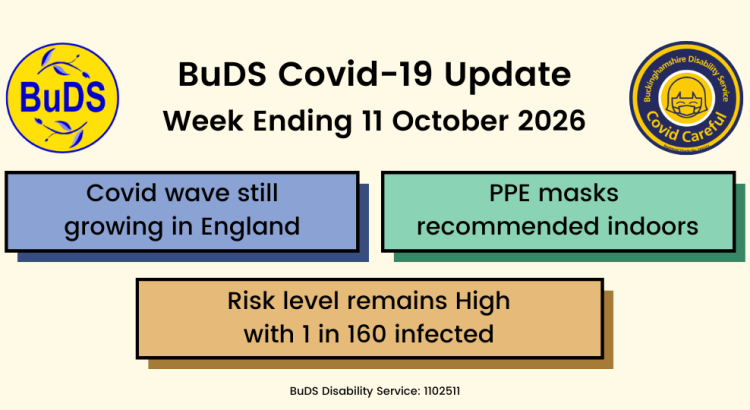
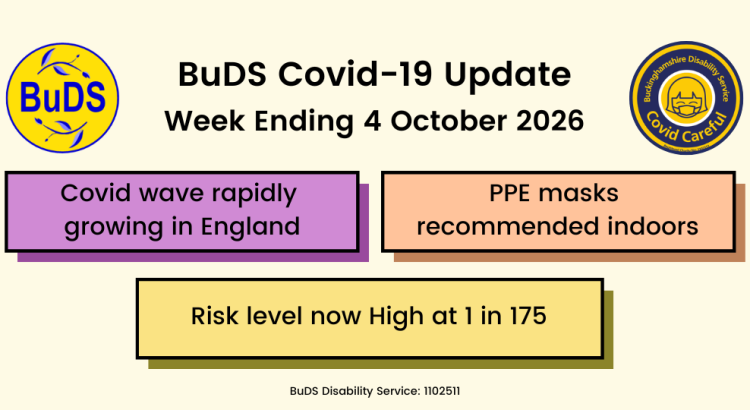
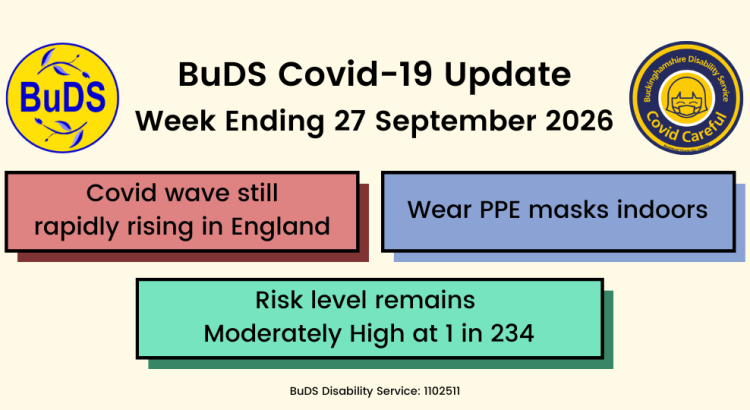
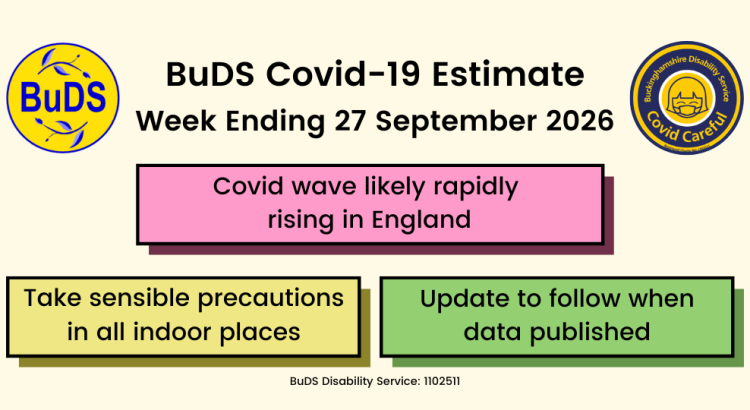
The IAG team works tirelessly to produce easy to read, fact-checked and reliable articles about issues relevant to disabled people. During the Covid-19 pandemic, these have included weekly risk posts which break down the latest case, hospitalisation, death and vaccination statistics; analyses of Government policy, and scientific updates about the coronavirus. To read these posts, please see below or visit our Facebook page using the button below:

If you would like to volunteer for the IAG team as a researcher or writer, please visit our volunteering page to find out more.

About The Fair4All Card

What is the Fair4All card? 1. Helps disabled people prove what adjustments they are legally entitled to. 2. Secure photo card for disabled people. 3. Explains how other people can help. 4. Simple statements means it can be used anywhere. 5. Doesn't list any disabilities or conditions.

What is the Fair4All Card Scheme?

The Fair4All Card is a secure, evidence based card that can be used by any disabled person to communicate the reasonable adjustments they need.

We created the scheme in August 2020 and have grown from offering around 12 reasonable adjustments to now offering over 40.

Find out more about the scheme below.

Read More
Covid infection risk continues to fall. Risk level Moderately Low at 1 in 1597. Precautions still needed in High Risk indoor places.

Covid-19 Risk Assessment: Week Ending 03 May 2026

Covid infection levels in England have fallen again to a new low. The risk level remains Moderately Low, with 1 in every 1597 people in England infected.

As regular readers will know, BuDS researchers use highly reliable data to calculate prevalence. We independently confirm our results using all other available data. As Covid-cautious people ourselves, we rely on these estimates just as much as we know our readers do.

Read More
Historically low Covid infection risk. Covid risk level Moderately Low at 1 in 1346. Spring Covid boosters recommended.

Covid-19 Risk Assessment: Week Ending 26 April 2026

Covid infection levels in England have continued to fall and remain at the lowest levels recorded since 2020. The risk level remains Moderately Low, with 1 in every 1346 people in England infected.

This estimate is based on highly reliable data and is independently confirmed by all other available data, However, Covid has not vanished and people could still catch the virus in high-risk indoor places.

Read More
Covid infection risk still at historic low. Covid risk level now Moderately Low at 1 in 1052. Spring Covid boosters still advised.

Covid-19 Risk Assessment: Week Ending 19 April 2026

Covid infection levels in England have fallen to the lowest levels recorded since the pandemic began. The risk level is now Moderately Low, with 1 in every 1052 people in England infected. The risk from respiratory viruses, including Covid, in the community remains at its lowest ever level.

This estimate is based on highly reliable data, and the downward trend of infection levels is independently confirmed by all other available data. As a community of disabled and highly Covid-cautious people, BuDS is satisfied that Covid infection levels in England are indeed at unprecedented lows at present. However, Covid has not vanished and there is still a risk of catching the virus in high-risk indoor places.

Read More