

Article accurate as of 16 March 2026
There has been an outbreak of “invasive meningococcal disease” in the Canterbury area of Kent. Two teenagers have died, and a number are seriously ill. The NHS are warning that anyone who becomes unwell with symptoms of meningitis or septicaemia should go immediately to A&E or call 999.
Cases of this serious disease have not been reported outside Kent so far. The NHS is giving antibiotics to thousands of people in the area to try and prevent any spread. However, meningitis can and does spread between people. For this reason, we are warning all disabled people, carers, and clinically vulnerable people to be on special alert for the symptoms.
Symptoms To Look Out For
- A skin rash which does not fade when pressed with a glass – this is the most important symptom of meningitis/septicaemia
- High fever (feeling very hot to the touch and/or having a high temperature when measured using a thermometer)
- Severe headache
- Rapid breathing
- Vomiting
- Cold hands and feet
- Drowsiness or confusion
- Stiff neck
- Dislike of bright lights
- Joint and muscle pains
If you, or someone you know, has one or more of these symptoms, it is important to get immediate medical advice. Meningitis/septicaemia can develop frighteningly quickly, and people can go from feeling unwell to being dangerously ill in a matter of hours.
If you have a skin rash which does not fade when pressed with a glass, you should go immediately to A&E or call 999.
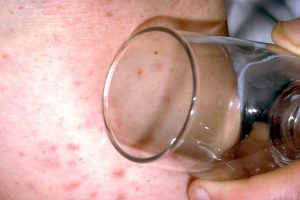
A meningitis/septicaemia rash does not fade if you press the side of a clear glass firmly against the skin. Call 999 straight away.
Image from NHS website
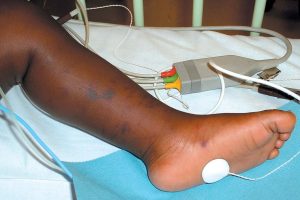
The rash can be harder to see on brown or black skin. Check paler areas, such as the palms of the hands, soles of the feet, roof of the mouth, stomach, whites of the eyes, or the inside of the eyelids. Call 999 straight away.
Image from NHS website
If you have the other symptoms, and are seriously ill, you should go immediately to A&E or call 999.
If you have the other symptoms but do not feel seriously ill, you should get medical advice immediately by contacting your GP or calling 111.
In case of doubt, do not hesitate to call 999 for advice.
To view the NHS advice about meningitis, click the button below.
How Infectious Is Meningitis?
Meningitis is the name given to an infection affecting the membranes (“meninges”) around your brain and spinal cord. It is a life-threatening condition if not treated very quickly.
Meningitis is caused by a number of different bacteria and viruses. Meningitis itself is not infectious, but the bacteria and viruses that cause it are infectious.
The most serious type of meningitis is that caused by bacteria. These bacteria are spread by respiratory droplets and direct close contact between people. This means that the bacteria is in tiny droplets of water breathed out by infected people. If another person breathes in these droplets, the bacteria enters their body and can cause an infection in them as well.
Respiratory droplets containing bacteria cannot travel very far before they dry up or fall to the ground. This means that only people standing close to an infected person, or having close contact with them like hugs and kisses, are likely to breathe in the infected droplets.
Meningitis can also be caused by viruses, but a viral infection is much less likely to trigger meningitis than a bacterial infection.
Stopping An Outbreak
Most people who catch a bacteria that can cause meningitis will not develop meningitis. Most people who catch a potentially meningococcal bacteria will remain well or only have mild typical symptoms of an infection. However, those people can and do pass on that bacteria to other people, and those other people might develop meningitis from it. This is why the NHS gives antibiotics to anyone who may have the meningococcal bacteria, even if they seem perfectly well. The antibiotics kill the bacteria, and so prevent people from passing it on.
When Should I Protect Myself?
The meningitis outbreak so far is only happening in the Canterbury area of Kent. Anyone living in that area should follow the instructions from the NHS and UKHSA.
If you live near to, but outside of the Canterbury area of Kent, and you have a long-term medical condition or are clinically vulnerable, you should consider taking sensible precautions until this meningitis outbreak is over. Precautions to consider are:
- Staying away from the Canterbury area, and people (especially university students and staff) from that area.
- Keeping your distance from other people who may be infected, especially in poorly ventilated indoor spaces and public transport.
- Wearing a PPE respiratory mask (FFP2/FFP3 rated) in crowded indoor spaces.
- Respiratory droplets do not survive for long in outdoor places, so precautions outdoors are probably not needed.
If you live away from the Canterbury area of Kent, there is no evidence that you are at any higher risk of catching a bacteria which might cause meningitis. If you are clinically vulnerable, you should be taking precautions to avoid infectious diseases, and these precautions will also protect you against meningitis bacteria.
More Information
If you would like further information, please contact us using the form below or by emailing enquiries@buds.org.uk.
Disclaimer
This article is only general non-personalised Health Information and Advice. BuDS Disability Service does not provide Medical Advice, that is to say personalised health information or advice intended for or tailored for one person, or relating to a specific person’s symptoms or medical history. BuDS strongly advises people to consult their own doctor or healthcare professional for personalised health information, advice or diagnosis. For more information, click the button below.