Articles in Blog Posts

A person looking at a laptop. On the laptop screen are pictures of 4 people in a video call.

Why Is Now The Best Time To Volunteer & Join Reach4Work?

Written by David Bennett

Disclaimer: this is a personal blog by a BuDS member. The views expressed are personal, and don’t necessarily represent those of BuDS or our Trustees.


The Covid pandemic triggered a truly remarkable effect upon the workplace. Before Covid, everybody was expected to attend an office and sit at a desk where they could be seen to be “working”. In some enlightened workplaces, the advent of remote communication technology allowed employees to work from home. This managerial concession had led to some workers being allowed to occasionally work from home when circumstances demanded it. Indeed, there were some that were allowed to work 100% from home but these were the exception rather than the rule. With the onset of the pandemic, it became imperative if work was to continue, then employees had to be enabled to work from home. Due to technological advances, this proved far easier than managers thought. 

Read More
A disabled person using a power wheelchair seen about to enter a community centre, which is being used as a polling station

Covid Risks When Voting In Person

People wearing masks when voting in person during elections may be asked by the election staff to remove their masks for an identity check. Taking your mask off exposes you to a higher risk of catching Covid, especially as there will be no Covid precautions in polling stations.

If you refuse to remove your mask when requested, it is likely that the election staff will not issue a ballot slip as you will not have passed the new identity check for elections. This means you will not be able to vote.

It is not yet certain how many polling stations will request people to remove their masks – BuDS is making urgent enquiries of the Electoral Commission. However, it is safer for you to assume that you will be asked to remove your mask if voting in person.

If you do not wish to be exposed to a higher risk of catching Covid by removing your mask in this way, BuDS recommends the following:

Read More
1 in 50 people in Bucks now infected. 6 infected people in a busy supermarket. Risk of meeting someone with Covid remains Extremely High.

Covid-19 Risk Assessment: Week Ending 17 April 2023

The risk of meeting a Covid-infected person in your everyday life this week remains Extremely High, as the latest wave continues to decline. Around 1 in every 50 people in Bucks have Covid.

As an example of the risk of catching Covid, a typical busy supermarket will have between 6 and 11 infected people breathing out virus which you could catch.

The current wave of infection is now well past its peak, and will probably continue to decline over the next few weeks. However, the risk of meeting a Covid-infected person will probably remain Extremely or Very High for the rest of April.

BuDS continues to recommend that disabled and clinically vulnerable people avoid indoor spaces unless they are wearing a filter mask (FFP2/3). For more advice on how to avoid catching Covid, use this link.

This data is based on the Zoe Health Study for Covid-19, adjusted to take account of its limited coverage. To learn more about this, use this link.

For more Covid information and help, please contact BuDS and we will be happy to help.

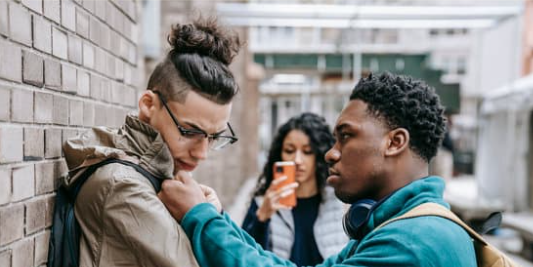
A man holds another man by the throat, pushing him up against a wall. A woman films on her mobile phone.

Joining BuDS and the Attitudes and Hate Crime Project

Written by Hope Heeley

Disclaimer: this is a personal blog by a BuDS member. The views expressed are personal, and don’t necessarily represent those of BuDS or our Trustees.


Hello!

My name is Hope, I am the Disability Hate Crime Officer here at BuDS. I began working for BuDS in January 2023. BuDS is my first true experience of the working world and I have never felt more welcome.

“BuDS is an incredibly supportive and hard-working charity.”

BuDS is an incredibly supportive and hard-working charity. Their sole aim is to help disabled people in any way they can, this has been made clear to me in our most recent projects.

Read More
The Neurodiversity In Business Community Partner logo. It is a purple circle with a series of coloured arches around an image of a brain. The words "Neurodiversity in Business" are in the purple circle. The words "community partner" are in a blue banner across the lower portion of the circle.

BuDS Joins Neurodiversity in Business (NiB)

Buckinghamshire Disability Service (BuDS) has become a Community Partner of Neurodiversity in Business (NiB), the voluntary industry forum supporting the participation of neurodivergent individuals in the workforce.

NiB draws on the cumulative knowledge of neurodivergency experts like BuDS and leading companies to share best practices and improve the employment and experience of neurodiverse people. 

Neurodivergency is a term used to describe a range of neurological conditions including autism, ADHD, dyslexia, dyscalculia and Tourettes.

Read More
Four people wearing outdoor clothing and hi-vis jackets standing in a wood next to a information board. One of the people is a wheelchair user. They are smiling at the camera, although muddy and tired.

BuDS Fair4All Access & Inclusion Survey At Whiteleaf Cross

On Thursday 16th March, a group of disabled volunteers from BuDS visited the nature reserve at Whiteleaf Cross and Brush Hill, Princes Risborough, to carry out a Fair4All Access & Inclusion Survey on behalf of the Chiltern Conservation Board. This was a paid survey, but the conclusions made and recommendations given are entirely that of BuDS, and are not influenced in any way by the Chiltern Conservation Board.

To learn more about Fair4All Access & Inclusion Surveys from BuDS, click here.

Read More
1 in 45 people in Bucks now infected. 12 infected people in a busy supermarket. Risk of meeting someone with Covid now Extremely High

Covid-19 Risk Assessment: Week Ending 10 April 2023

The risk of meeting a Covid-infected person in your everyday life this week is now Extremely High, as we pass the peak of the latest wave. Around 1 in every 45 people in Bucks have Covid.

As an example of the risk of catching Covid, a typical busy supermarket will have between 7 and 12 infected people breathing out virus which you could catch.

The current wave of infection has now passed its peak, and will probably continue to decline over the next few weeks. However, the risk of meeting a Covid-infected person will probably remain Extremely High for the rest of April.

BuDS continues to recommend that disabled and clinically vulnerable people avoid indoor spaces unless they are wearing a filter mask (FFP2/3). For more advice on how to avoid catching Covid, use this link.

This data is based on the Zoe Health Study for Covid-19, adjusted to take account of its limited coverage. To learn more about this, use this link.

For more Covid information and help, please contact BuDS and we will be happy to help.

Covid & How To Avoid Catching It

This page is under construction. Come back later for the finished version. (September 2025)

About Covid

Covid is a very infectious virus. If enough of the virus reaches your nose, mouth, and lungs, the virus will enter the body and cause an infection.

Covid spreads mainly in the air. Tiny particles of the virus float in the air like invisible smoke. If you breathe in enough of these tiny particles, you will catch the virus.

Covid gets into the air when it is breathed out by infected people.

Covid does not survive well in fresh, moving air. Even if an infected person breathes out Covid outdoors, the natural movement of the air will disperse the virus, and there is a very low risk that you will breathe in enough to get infected. Being outdoors is a safe place for not catching Covid.

Indoors, Covid can hang in the air for up to an hour. This means that if you go into a room where an infected person has been, you may still be able to breathe in enough virus to get infected, even though the infected person has left.

The way to make indoor air safer is to introduce fresh, moving air by opening windows and doors, or to filter the air using a HEPA filter which removes the virus from the air. When Covid infection levels are high (as they are now), it is safest to assume that all indoor places may contain infected air, unless they are well ventilated with fresh moving air and/or HEPA filters are being used.

If you cannot make indoor air safer with ventilation and/or filtration, you need to prevent the virus entering your nose and mouth. You do this by wearing a tight fitting personal protective equipment (PPE) mask certified FFP2/FFP3. These masks are scientifically designed to prevent viruses and bacteria from passing through the mask, but they do not prevent normal breathing. Athletes regularly train wearing these masks without any problems.

The Covid virus also lives inside the tiny water droplets that people breathe out. These droplets very quickly dry up and the virus falls onto the ground and surfaces. However, scientific studies have conclusively proven that it is very rare for people to catch Covid by touching a surface and then putting their hand in their mouth. It is theoretically possible, but in practice hardly ever happens. It is important to wash your hands regularly for lots of reasons, but washing your hands or using hand sanitiser will not protect you from catching Covid. Covid is in the air, and only precautions that reduce the airborne risk are effective.

Get Vaccinated!

Being fully vaccinated and boosted is your best protection against death or serious illness. The autumn 2022 booster programme has now ended, but a very limited number of people may be able to get a spring 2023 booster. Learn more here.

Currently, adults and teenagers can still get free vaccination if you haven’t had your first three ‘primary’ doses. If this is you, please ask your GP or book a vaccination online through the NHS app now. The latest research suggests that having your three primary doses of vaccine reduces your risk of developing Long Covid.


Wear A Protective Mask!

Wearing a protective face mask which filters the virus out of the air you breathe is another of the best ways to protect yourself from Covid. Wearing an FFP2 or N95 filter mask means that the air in your lungs is clean, even if there is lots of Covid in the air around you. BuDS recommends Cambridge Masks Co. If you can’t afford a mask, please contact us and we will see if we can help.