
29 July 2026
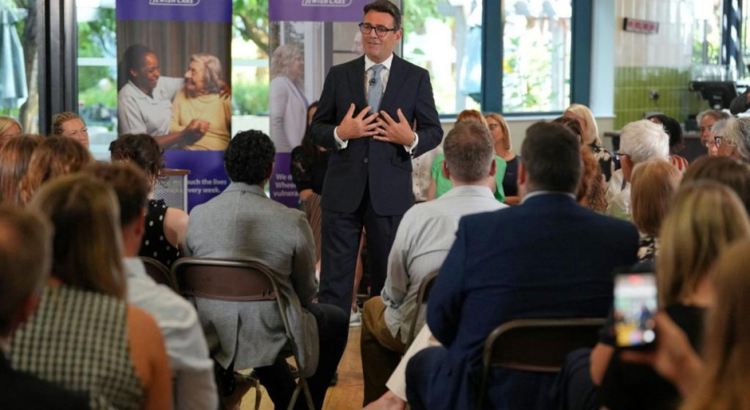
The Prime Minister, Andy Burnham, has said that the ‘fixing’ of palliative and social care must happen before any steps are taken towards legalising assisted dying or assisted suicide. His comments, made at the launch of the PM’s plans to transform social care for older and disabled people, are widely seen as a rebuke to Lauren Edwards and a handful of other Labour MPs and Peers who are trying to re-introduce a private assisted suicide bill drafted by the lobby group Dignity in Dying.
BuDS Disability Service very much welcomes the PM’s sensible statement. We look to Lauren Edwards to now withdraw her Bill and not to waste the House of Commons’ time on an initiative which is not needed and which will inevitably fail.
The disabled-led charity, which has consistently opposed assisted suicide as a risk to disabled people, said:
“British advocates for assisted suicide claim it is necessary because many people die in pain and distress that could be averted if they took their own life through medically-assisted suicide. It is obvious that this claim relies on NHS and hospice palliative and end-of-life care being inadequate. The PM is perfectly right to say that the first step must be to fix palliative and end-of-life care, and only then to assess whether the claim made by advocates of assisted dying is correct”.
“That said, there are other issues which also need resolving in any future debate about assisted dying. These are:
- The obvious risks to disabled, older and vulnerable people from any state-sanctioned scheme to help people to take their own life, whether at the end of life or otherwise. BuDS feels that an explicit judicial decision after a full legal process must be required before the state takes anyone’s life, even at their own supposed request. Given that the rights of disabled people are protected in law and that courts are routinely involved in the protection of vulnerable people, it is extraordinary that pro-assisted dying advocates suggested that NHS patients might have their life taken by NHS doctors after a purely administrative process far less rigorous than a DWP assessment for benefits.
- The risk that assisted suicide is seen by patients, relatives and carers, and the NHS and social care providers, as a legitimate alternative to continued care and support. Once people can ‘choose’ to have their life ended, the pressure – both self-imposed and externally applied – to make that choice will become very strong.
- British society for hundreds of years has not accepted that suicide is a rational response to life event, Society sees suicide and suicidal ideation as a symptom of distress, fear or mental illness. The NHS, councils, the government and the voluntary sector work to identify suicide risk and reduce it. To legitimise ‘rational suicide’ in some circumstances is to entirely overturn the way British society looks at suicide.
- The ‘foot in the door’ tactic used by advocates for assisted dying. The ideological policy goal of Dignity in Dying, formerly known as the British Euthanasia Society, of Humanists UK, and of many of the individuals who support assisted dying, is for assisted suicide to be freely available on demand. BuDS thinks that these pro-suicide groups and people are using support for humanitarian assisted dying purely as a stepping stone towards their ideological goal. This is precisely what has happened in many other countries around the world who introduce ‘humanitarian’ assisted dying only for the scope of the suicide scheme to widen later. This issue must also be addressed whenever assisted dying is next debated.”
(ends)
Date: 29 July 2026
Enquiries: info@buds.org.uk or message BuDS through social media.