
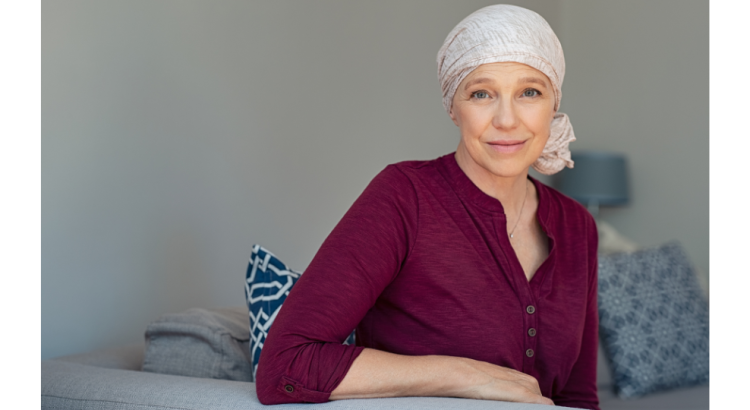
There is now compelling medical evidence that Covid-19 infections can reactivate dormant cancer cells, and trigger the growth of secondary cancers (metastatic progression). In studies, cancer survivors who contracted Covid had a statistically significant higher risk of cancer-related deaths compared to uninfected cancer survivors.
This is such an important issue that BuDS has decided to run an awareness campaign over the autumn and winter. The aim of the campaign will be to warn cancer survivors of the very real additional danger that Covid poses to them.
We have worked hard to give you accurate information. However, you should always speak to your own GP, oncologist, or cancer clinic to get personal medical advice. We are not doctors, and we cannot give you medical advice.
Covid & Cancer: The Facts
Two very recent academic research studies have given us new understanding of how Covid and cancer interact. These studies are:
- Chia, S.B., Johnson, B.J., Hu, J. et al. Respiratory viral infections awaken metastatic breast cancer cells in lungs. Nature 645, 496–506 (2025). https://doi.org/10.1038/s41586-025-09332-0
- Anderer S. COVID-19, Flu May Reawaken Dormant Cancer Cells. JAMA. 2025;334(12):1047–1048. https://doi.org/10.1001/jama.2025.14772
The Nature research
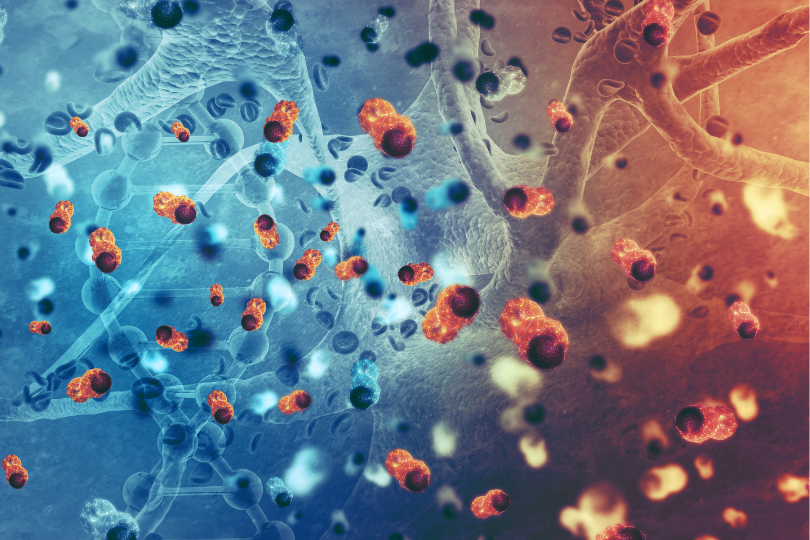
This research started with the fact that most people who die of breast cancer do so when the cancer, having previously been in remission, spreads to other parts of the body. Why and how dormant cancers start to spread in this way is key to improving cancer survival rates.
When a cancer is in remission, this means that the cancer cells are in a dormant state. This means that they are not actively dividing or growing. The cancer cells exist in a microenvironment within the body, and that microenvironment encourages the cells to stay dormant.
It is well known that Covid-19 (and other respiratory viruses like influenza) cause inflammation of cells both in individual organs (like the lungs) and across the whole body (systemic). What the Nature research has shown is that the inflammation caused by Covid-19 (and other respiratory viruses) disrupts the microenvironment which is encouraging cancer cells to stay dormant. When this environment is disrupted, the dormant cells change their state from being dormant to being active. When the cells become active, they start dividing again – which means that the cancer grows.
As the cancer cells duplicate, some of them will circulate around the body in the bloodstream and lodge in other parts of the body. Secondary cancers will develop in those areas. This is known as metastatic progression – one cancer becoming several cancers.
The Nature research shows that a Covid-19 infection can trigger a very rapid change in a dormant cancer. Within days of the Covid infection causing an inflammation, dormant cancers can be growing actively again, and causing secondary cancers to start to form within two weeks.
The Nature research was concerned with finding how Covid-19 and influenza infections could cause dormant cancers to become active. Separate research looking at the medical records of millions of people with cancer of all types proved that Covid infection substantially increased both the risk of dying from cancer, and of cancers spreading within the body, compared with cancer survivors who did not catch Covid. This observational data led to the conclusion that not only can Covid-19 and influenza cause dormant cancers to become active, but that this is occurring on a large scale.
The JAMA Research
This research, published in the Journal of the American Medical Association (JAMA), was independent from the Nature research above. Published a month after the Nature research, it supported and added to that research’s conclusions, putting forward another potential mechanism by which Covid-19 could stimulate dormant breast cancer cells. It also suggested that different types of cancer might be reactivated in different ways, although this is still being investigated further.
What Does This Mean For Me?
This is really important news for anyone who has ever had a cancer, or who is a family member, friend, or carer for someone who has ever had a cancer. About half the UK population will be diagnosed with cancer at some point in their lifetime (Cancer Research UK), so this affects many millions of people in the UK alone.
If you have ever been diagnosed with a cancer at any point in your life, you need to be aware that catching Covid (or influenza) increases the risk that your cancer will return, and possibly spread to other parts of your body. This is an established medical fact.
Unfortunately, we cannot say how much your risk of cancer returning will increase. Answering this question will need a lot more research and probably the opportunity to look at several years of data. The increased risk could be small, or it could be large. It is an unknown factor. We appreciate this is not very helpful, but we have to be accurate.
What Should I Do?
Any risk that your cancer might return or spread to another part of your body is a risk to be avoided. BuDS follows the precautionary principle in medicine, which emphasises preventing harm when full scientific certainty is lacking.
If you are a cancer survivor, or if you are being treated for cancer currently, we recommend that you take strict precautions to avoid catching Covid. If you do not catch Covid, you cannot run the risk that it reactivates your cancer.
If your child has ever had cancer, or is being treated for cancer, be aware that catching Covid may reactivate their cancer or cause it to spread. Your child should take strict precautions to avoid catching Covid. This may mean that all members of your family who come into contact with the child also have to take precautions against catching Covid, or you may need to take precautions within your own home. Remember, NHS staff will almost certainly not take any precautions to protect your child against Covid.
Please talk to your own doctors, or your child’s doctors, about the risk that Covid presents to you/them. You can share the links above to the original research. BuDS always recommends that you follow the advice of your own doctors.
As a person who has been diagnosed with cancer, you are automatically a disabled person in law under the terms of the Equality Act 2010. This means that you are legally entitled to expect others to make ‘reasonable adjustments’ for your disability, i.e. your cancer. Given that there is a scientifically proven higher risk for you from catching Covid or influenza, it is reasonable for people – including your employer – to make adjustments to protect you from Covid. See more about this below.
Don’t Avoid Treatment!
It is vital that you continue to talk to doctors about your health and medical issues. If you are receiving medical treatment, or treatment for cancer, it is vital that you continue that treatment. BuDS does not recommend that you avoid doctors or medical treatment. What we do recommend is that you continue to see doctors and receive treatment, but that you do so in a more Covid-safe way, for example by wearing a PPE respiratory mask in healthcare settings. See below for more information.
More About Covid
To learn more about Covid and how to avoid catching it, click the button below.
Your Legal Rights As A Disabled Person With Cancer
As mentioned above, if you have been diagnosed with cancer, you are automatically a disabled person in law under the terms of the Equality Act 2010. It does not matter how long ago your diagnosis was, and you remain a disabled person in law for your whole life. This means that you are legally entitled to ‘reasonable adjustments’ for your disability, i.e. your cancer. Given that there is a scientifically proven higher risk for you from catching Covid or influenza, it is reasonable for people – including your employer – to make adjustments to protect you from Covid.
Please note that these rights relate specifically to disabled people with cancer, not necessarily to disabled people who are clinically vulnerable for another reason. This is because there is research proving a direct link between people with cancer and Covid.
In Your Everyday Life
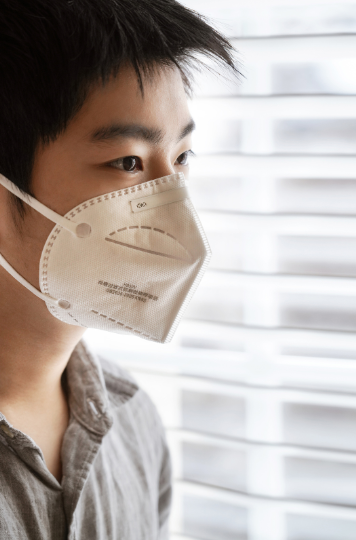
Shops, public buildings, theatres, restaurants, bars, and so on are required to protect you from Covid as a reasonable adjustment for your disability. The key is that the adjustment has to be reasonable in all the circumstances. Because there is no general legal entitlement to air which is free from viruses, you cannot insist on breathing air which is free of Covid. However, everywhere should cooperate with you to help you protect yourself from Covid where it is reasonable for them to do so. This could include:
- Not objecting if you wish to wear a PPE respiratory mask* for your protection, even if covering your face is not normally allowed e.g. in banks
- Allowing you to open a window or door increase ventilation where you are standing or sitting, as long as this does not significantly disadvantage other people
- Allowing you to use a portable or plug-in HEPA filter to ensure the air near you is clean
- Agreeing to your requests to be placed next to windows or away from other people to reduce the risk, e.g. in cafes or restaurants
- Serving you out of doors on request
- Not requiring you to remove your face mask for ID checks indoors, and carrying out ID checks without a face mask outdoors on request
These are all reasonable adjustments which a court, if the matter came before them, would agree should be provided under the Equality Act.
*a PPE respiratory mask is one specifically designed to filter viruses and bacteria out of the air you breathe. In the UK, they must comply with British Standards BS EN 149:2001 & EN A1:2009. Masks marked as FFP2 filter a minimum of 94% of airborne particles out of the air, and masks marked as FFP3 filter a minimum of 99%. These are the minimum standards you should use for personal protection. Please note that blue surgical masks, as used by dentists and doctors, do not protect against airborne viruses, and should not be used for personal protection. A PPE mask must be tightly fitting to the face so that air passes through the mask and not around the edges.
NHS Buildings
Although the NHS accepts that Covid is an airborne virus, ridiculously the only precautions required in NHS settings relate to Covid not being an airborne virus and only being spread by contact. So, you will find that hospitals, GP surgeries, etc will ask you to wash or sanitise your hands, but do nothing to clean the air. Also, NHS staff are required to work even if they have tested positive for Covid, unless they are generally too ill. This applies even in services working with extremely clinically vulnerable people, such as oncology clinics. Sadly, this means that NHS buildings are the number one place to catch Covid, and many people who die of Covid catch it in hospital (a nosocomial infection).
Taking strict precautions to avoid catching Covid in NHS buildings is essential. This particularly applies at cancer and oncology clinics, which often have no Covid precautions despite being filled with immunosuppressed people. Because you can rarely open windows or use a HEPA filter in an NHS building, the only realistic precaution you can take is to wear a PPE respiratory mask. We strongly recommend that you do so.
Workplaces
Your employer is not under a duty to provide you with clean air free from viruses under the Health and Safety at Work Acts. The Government changed the law in 2021 so that employers did not have to provide their employees with virus free air. Because of this, you cannot use health and safety law to protect yourself from Covid at work.
However, your employer is under a duty to make reasonable adjustments for your disability, as you are a disabled worker protected by the Equality Act because of your cancer. Here’s how to go about doing this:
- Inform your employer officially, in writing, that you have a diagnosis of cancer and therefore you are a disabled person in law under the terms of the Equality Act 2010, Schedule 1, Paragraph 6 (1). You may need to provide proof of diagnosis
- Ask your employer for the reasonable adjustments you would like as a disabled person (see list below)
- You can then negotiate with your employer about the reasonable adjustments they are prepared to grant. If they refuse to provide adjustments, this can be disability discrimination, and if you have to leave your job because they have not provided adjustments, this can be an unfair dismissal. Check the ACAS website for more information.
Reasonable adjustments that you can ask your employer to make include:
- Working remotely from home (if your job can be done remotely) to avoid infection risk in the workplace. This is a very common adjustment which many workers with cancer receive
- Changing your hours, or the way you work, to reduce infection risk in the workplace. For example, you could move from a public facing reception role to an admin role that could be done mainly from home or in a quiet office
- Providing fresh air ventilation and/or HEPA filtration in the workplace so that you do not have to breathe virus-laden air. This approach benefits all workers
- Allowing you to wear a PPE respiratory mask in the workplace where necessary
Remember, your employer is under a legal duty to make reasonable adjustments, so you do not have to rely on their goodwill or charity. These are precautions which are your legal entitlement as a disabled person.
More Information & Help
The following national cancer organisations can offer help and support.
- Macmillan Cancer Support: 0808 808 0000
- Cancer Research UK: 0808 800 4040
- Cancer Support UK
- Maggie’s Centres
BuDS will be happy to help you in any way. Please feel free to contact us with any questions or requests for help. Use the contact page to get in touch.